The prostate cancer treatment landscape continues to evolve, creating new opportunities for providers to bring advanced, targeted therapies to more patients.
In July 2026, the U.S. Food and Drug Administration (FDA) approved Pluvicto® (lutetium Lu 177 vipivotide tetraxetan) for use in patients with PSMA-positive metastatic hormone-sensitive prostate cancer (mHSPC). The expanded indication moves Pluvicto earlier in the prostate cancer treatment journey and nearly doubles the number of patients who may be eligible for the therapy.
For urology practices and health systems, this advancement also underscores the growing importance of having the imaging infrastructure, expertise, and operational support necessary to participate in an increasingly sophisticated prostate cancer care pathway.
What Is Pluvicto?
Pluvicto is a targeted radioligand therapy designed to deliver radiation directly to prostate cancer cells that express prostate-specific membrane antigen, or PSMA.
Its latest FDA approval is based on results from the Phase III PSMAddition trial evaluating Pluvicto in combination with standard of care, including an androgen receptor pathway inhibitor (ARPI) and androgen deprivation therapy (ADT), compared with standard of care alone.
Updated results showed that the Pluvicto combination reduced the risk of disease progression or death by 33%. The study also showed a positive trend in overall survival, with safety and tolerability consistent with Pluvicto’s established profile.
Importantly, this approval means Pluvicto is now available across PSMA-positive metastatic prostate cancer, extending the therapy to patients earlier in their disease journey.
Expanding Treatment Also Means Expanding Access
As eligibility for therapies like Pluvicto grows, practices must consider more than the treatment itself. Patients need access to the imaging that helps physicians identify PSMA-positive disease and guide appropriate care.
PET-CT plays an important role in this pathway. In the PSMAddition trial, patients were identified as PSMA-positive using PSMA PET-CT imaging.
For physician practices and hospitals looking to expand advanced prostate cancer services, developing PET-CT capabilities can require significant infrastructure, regulatory expertise, specialized staffing, and ongoing operational management.
That is where the right imaging partner can make a difference.
Bringing Advanced Prostate Cancer Care to Minnesota Urology
Captive Radiology has experience supporting advanced prostate cancer imaging and Pluvicto-related care across its partner network. More recently, that expertise helped achieve an important industry milestone with Minnesota Urology.
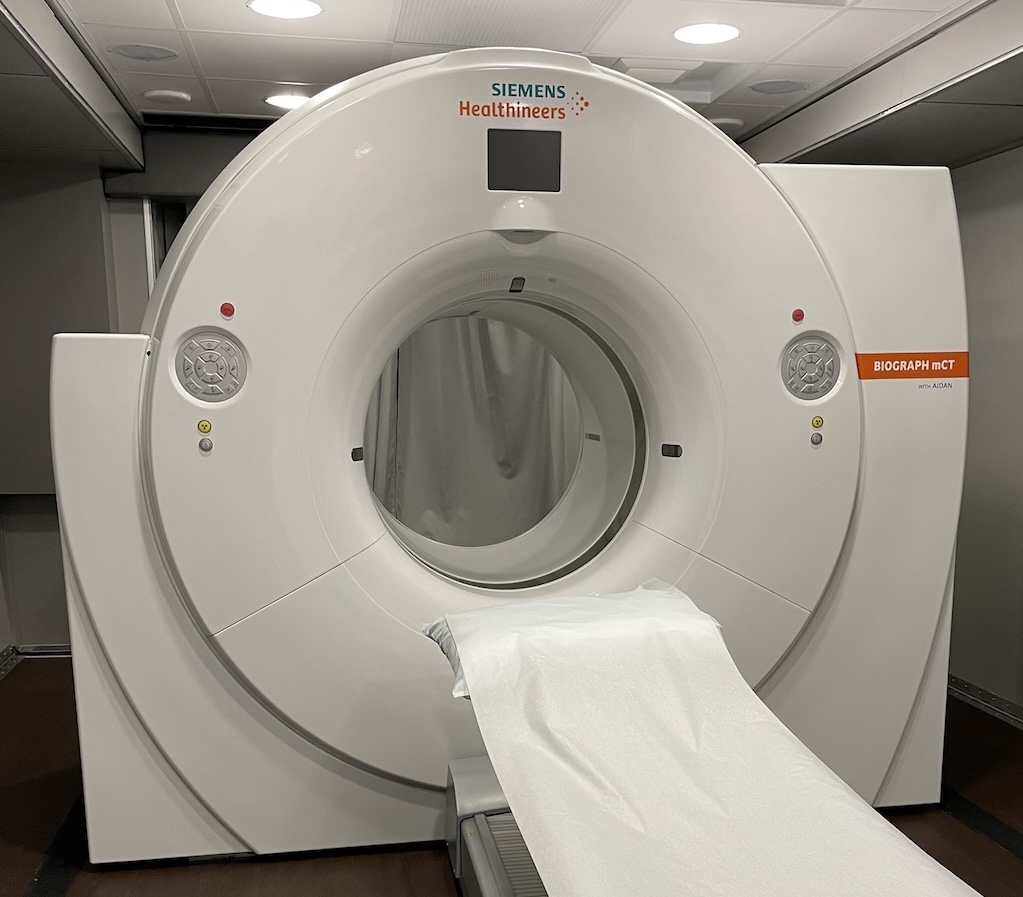
Minnesota Urology partnered with Captive Radiology to develop a fully managed mobile PET-CT program, bringing advanced imaging directly into one of the Upper Midwest’s largest independent urology practices. Captive provides the equipment, staffing, project management, quality oversight, and operational support necessary to keep the program running seamlessly.
Through that partnership, Captive Radiology and Minnesota Urology recently became the first in the country to support Pluvicto using a mobile scanner.
The milestone attracted attention from industry professionals who came to observe the process firsthand. For the Captive Radiology team, however, the work behind it reflected something much more familiar: the specialized imaging expertise, operational coordination, and attention to detail our team brings to advanced imaging programs every day.
Preparing for the Next Phase of Prostate Cancer Care
The expanded Pluvicto indication represents another step forward in precision prostate cancer care. It may also increase demand for the advanced imaging capabilities needed to support these evolving treatment pathways.
Practices do not necessarily need to build those capabilities alone.
Captive Radiology partners with urology practices, physician groups, and hospitals to develop turnkey PET-CT programs tailored to their patient population and operational needs. From mobile programs that expand access without the investment of a permanent imaging suite to fixed-site solutions for organizations ready to establish long-term imaging infrastructure, we manage the complexities that can otherwise make advanced imaging difficult to implement.
As therapies evolve and more patients become eligible, having the right imaging infrastructure in place can help practices stay prepared for what comes next.
Ready to explore how advanced PET-CT could fit within your prostate cancer program? Contact Captive Radiology to start the conversation.