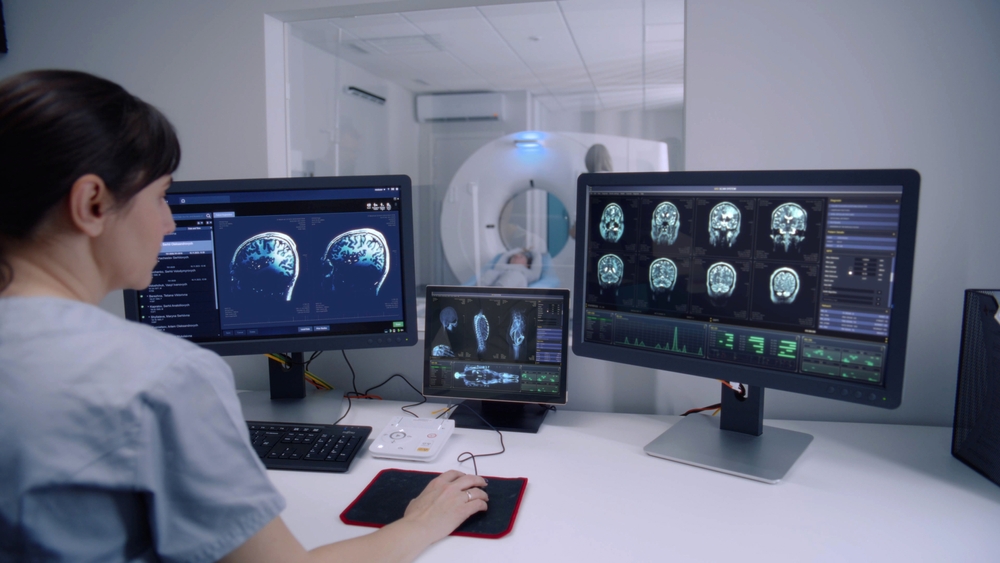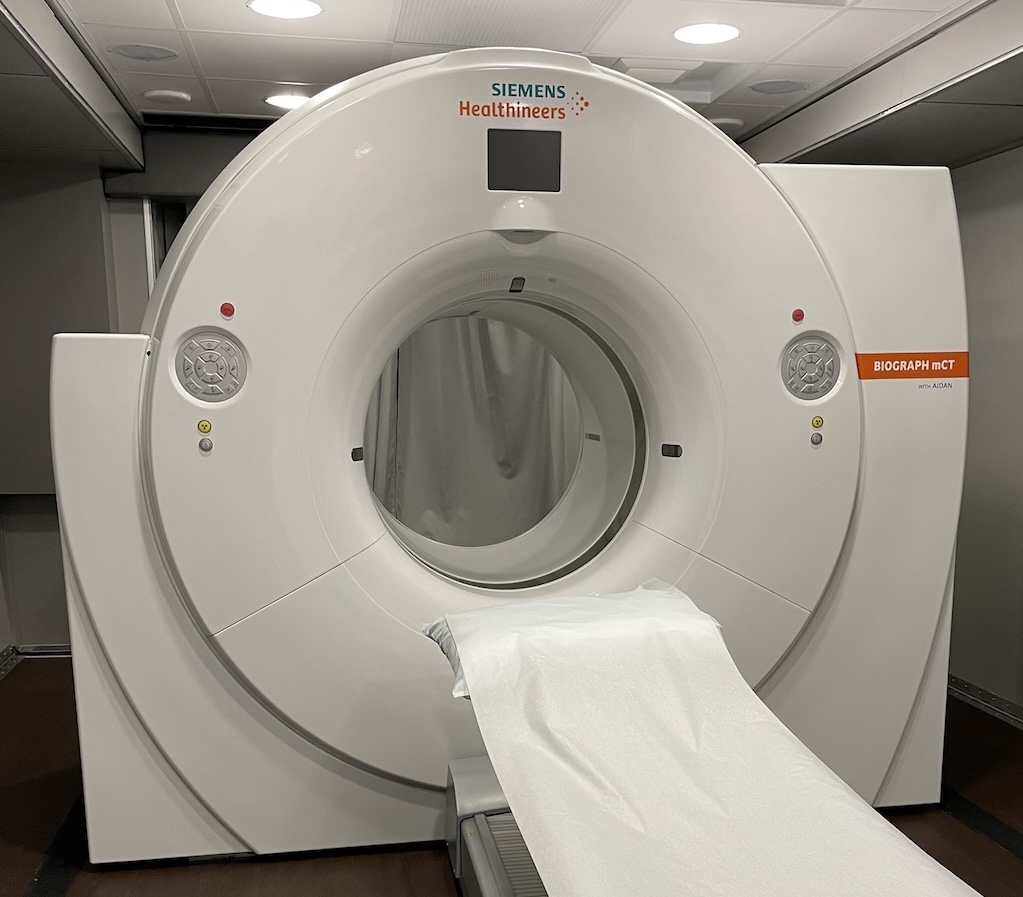
Medical imaging is rapidly evolving in both capability and complexity. What was once a set of complementary diagnostic tools has become a critical driver of patient outcomes, health-system performance, and clinical decision-making. As chronic disease rates climb and patient populations age, imaging volumes continue to rise, placing new pressure on providers to expand capacity, modernize equipment, and operate more efficiently.
Behind the scenes, market forces, technological breakthroughs, and demographic shifts are reshaping how imaging services are planned, delivered, and funded. Understanding these trends is essential for healthcare organizations determining when to invest, what to upgrade, and how to keep pace with demand.
Below, we break down the numbers behind today’s medical imaging market and highlight the forces that will shape its future.
Medical Imaging Market Projected Growth
Medical imaging encompasses X-rays, computed tomography (CT), ultrasound, magnetic resonance imaging (MRI), and positron emission tomography (PET). These tools help in diagnosing and treating a broad spectrum of disorders, including cancer, neurological conditions, and gynecological and musculoskeletal diseases.
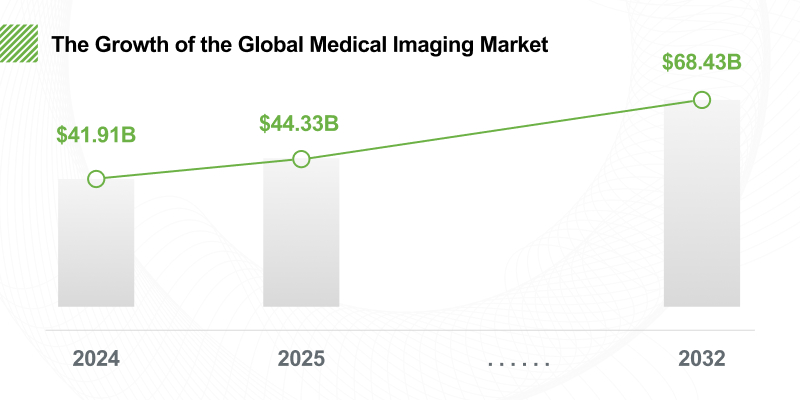
In 2024, the global medical imaging market was valued at $41.91 billion. Experts expect it to rise from $44.33 billion in 2025 to $68.43 billion by 2032, registering a CAGR of 6.4% over the forecast period. North America captured a 36.4% revenue share, with the Asia Pacific region experiencing the fastest growth.
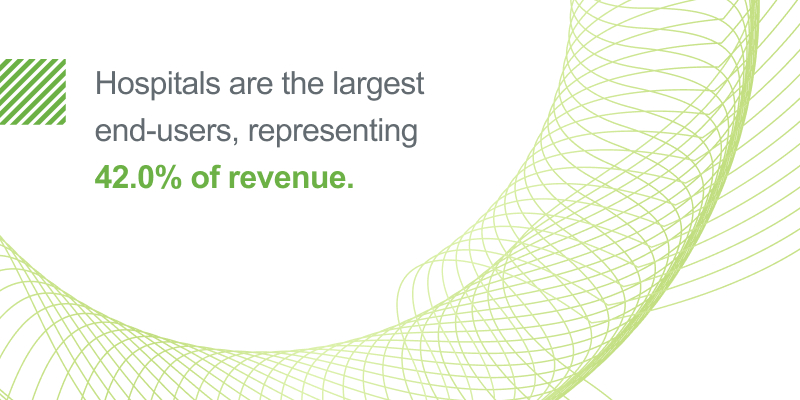
Breaking it down by application, orthopedic imaging led the market in 2024 with a 32.4% revenue share. Hospitals are the largest end-users, representing 42.0% of revenue. Among technologies, MRI remains dominant, holding a 27.6% market share.
Key Drivers
Several factors are shaping the trajectory of the medical imaging industry today.
The Geriatric Population
According to the United Nations Population Division, the population aged 65 and older will reach 2.2 billion by the late 2070s. As people live longer, they become more susceptible to conditions such as heart disease, stroke, cancer, and osteoporosis, all of which often require diagnostic imaging for effective management.
The Rise in Life Expectancy
The UN notes that a newborn in 2021 is projected to live nearly 25 years longer than someone born in 1950, reaching an average age of 71, with women typically outliving men by about five years. Longer lifespans naturally increase the likelihood of chronic illnesses, meaning more individuals require ongoing medical imaging throughout their lives.
Prevalence of Chronic Diseases
In the U.S. alone, the National Center for Health Statistics estimates nearly 1.96 million new cancer cases and over 609,000 cancer-related deaths in 2023. Early and accurate detection is pivotal in managing these conditions, and imaging technologies are at the forefront of this effort.
Increasing Healthcare Expenditure
Healthcare spending is climbing, especially in emerging economies such as China, India, and parts of Southeast Asia. Investments in medical infrastructure and technology adoption are fueling market expansion.
Government Initiatives and Funding
By boosting awareness of the benefits of imaging procedures, regulatory bodies and public health campaigns are contributing to the wider adoption of these technologies.
Key Industry Developments
Innovation in medical imaging continues at a remarkable pace, driven by major manufacturers and emerging technology companies alike. These advancements reflect broader shifts toward precision diagnostics, workflow efficiency, and more accessible imaging options.
Notable milestones include:
- 2017: Novartis accelerated the development of radioligand therapy (RLT) after acquiring Advanced Accelerator Applications, advancing highly targeted cancer treatment options.
- 2021: Philips launched the Spectral CT 7500, enabling routine spectral imaging, while Siemens Healthineers introduced Somatom X.ceed, building on its X.cite platform to enhance clinical performance.
- 2022: Siemens released the Symbia Pro.specta SPECT/CT, bringing new capabilities to hybrid nuclear imaging. Philips introduced its Ultrasound Compact System 5000 Series, expanding access to premium imaging in portable formats.
- 2023: GE Healthcare partnered with Mayo Clinic to push forward innovations in theranostics and precision diagnostics, strengthening integration between imaging and personalized medicine.
Together, these developments reflect a market moving toward greater accuracy, modularity, and accessibility—with advanced imaging increasingly available in outpatient and non-traditional care settings.
Turnkey Imaging Solutions to Bridge the Gap
At Captive Radiology, our mission is to bridge gaps in access to critical diagnostic services while ensuring timely, high-quality patient care. Our turnkey solutions cover every stage of imaging service implementation.
Market Analysis
We deliver a thorough evaluation of your diagnostic imaging services, goals, and needs. Whether assessing a new service line, upgrading used MRI machines, or expanding an existing suite, our focus is to help you make clinically efficient and cost-effective decisions. Learn more about medical imaging market analysis.
Operations and Project Management
Partnering with Captive Radiology means leaving the details to the pros. We handle service contracts, annual inspections, monthly Quality Assessment Programs, and more to keep your radiology department up and running. Learn more about radiology operations management.
Medical Imaging Equipment
We offer a comprehensive range of high-quality imaging equipment, collaborating with all major manufacturers and reputable third-party providers. Count on us to point you toward the best machines for your practices. Learn more about our medical imaging equipment offerings.
Embrace Medical Imaging Advancements with Captive Radiology
The medical imaging industry is experiencing remarkable growth, driven by demographic shifts, rising life expectancy, chronic disease prevalence, increased healthcare spending, and technological innovation. The numbers definitely tell a story of progress and opportunity.
For healthcare providers, embracing advanced imaging technologies is now essential. Captive Radiology stands ready to support you with expert guidance and services. Explore the possibilities today! Call (330) 966-0500 or contact us online.