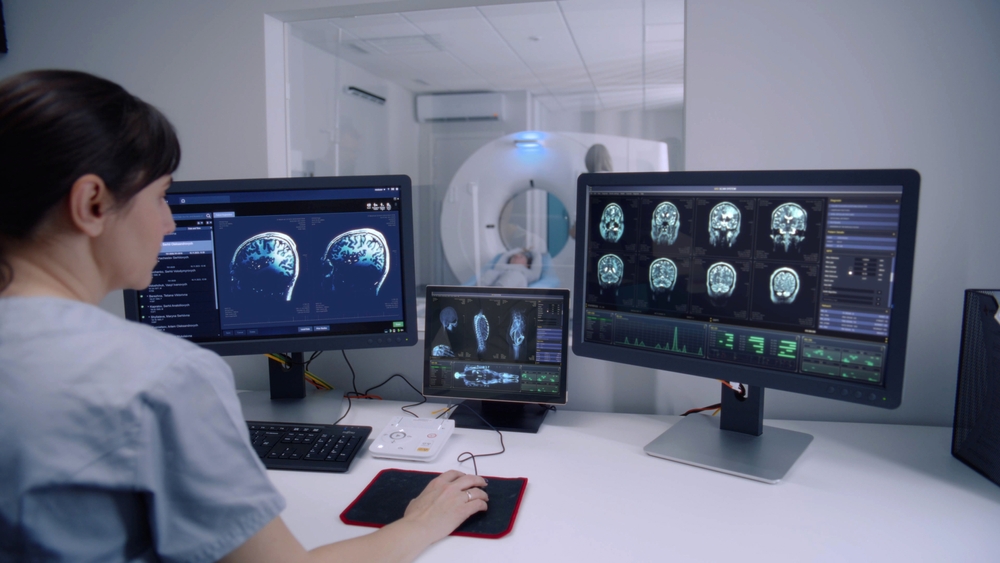
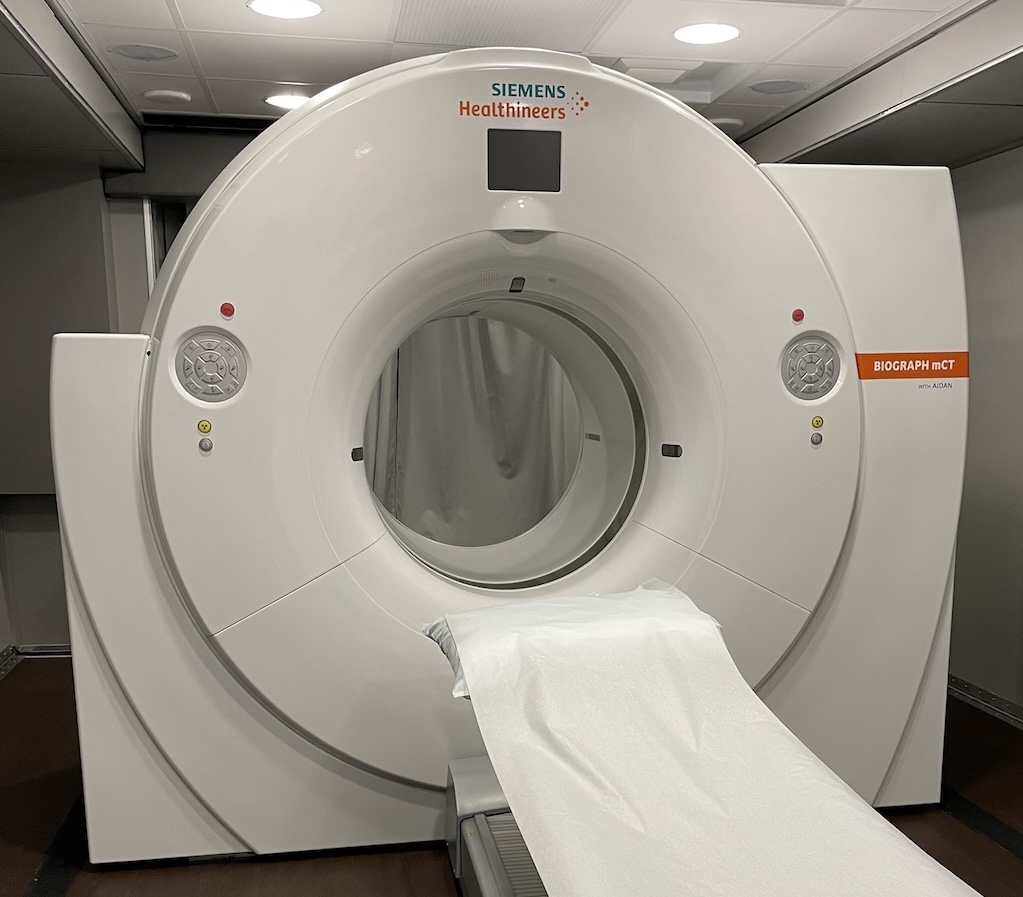
Recent research in Alzheimer’s risk assessment has taken another step toward understanding Alzheimer’s disease before symptoms appear.
The study focused on a predictive tool that estimates a person’s future risk of memory decline and cognitive impairment using a combination of biological and genetic factors, including amyloid PET imaging, age, sex, and APOE genetic status.
For medical practice leaders and imaging providers, findings like this highlight how the role of advanced imaging continues to expand in both diagnostics and disease prevention.
While the tool is currently for research use, its methodology reflects a growing reality: precision imaging is becoming central to early neurological care.
Precision imaging is becoming central to early neurological care.
A Broader Look at Predicting Alzheimer’s Risk
Recent coverage from Medical News Today highlights how researchers are increasingly combining age, genetics, and biological markers to estimate future memory risk well before symptoms appear. Rather than relying on a single test or clinical milestone, these emerging tools aim to help clinicians understand who is most likely to experience cognitive decline and when that risk may become meaningful.
The article underscores a key shift in Alzheimer’s research: moving away from reactive diagnosis and toward probabilistic, personalized forecasting. Imaging biomarkers, particularly amyloid detection, are central to this approach because they reveal changes in the brain that are not yet apparent in day-to-day function or standard cognitive screening.
This broader context helps explain why predictive models like the one examined in recent research are gaining attention. They are not designed to provide certainty, but to inform earlier conversations, guide monitoring strategies, and support more proactive clinical decision-making.
How the Predictive Tool Works
The model uses data from more than 1,300 participants who underwent amyloid PET scans. These scans identify amyloid plaques in the brain, one of the hallmarks of Alzheimer’s disease.
Researchers then combined those results with demographic and genetic information to calculate an individual’s risk of developing mild cognitive impairment (MCI) or dementia over time.
The tool outputs two estimates:
- 10-year risk of cognitive decline
- Lifetime risk, based on biological and genetic factors
By combining these inputs, the model provides a more personalized risk profile. For example, a person with high amyloid buildup and an APOE ε4 gene variant (known to increase Alzheimer’s risk) may have a substantially higher predicted probability of decline compared to someone without those markers.
The result?
A more personalized risk profile.
Why This Matters to Clinical Imaging
While the tool itself is not yet part of routine clinical practice, it reinforces a key message: imaging plays an increasingly predictive role in care pathways.
For decades, neuroimaging was primarily used to confirm a diagnosis after symptoms began. However, the study underscores how imaging (particularly PET-CT) can identify structural and biochemical changes years before cognitive decline becomes obvious.
This has major implications for:
- Earlier Intervention: Physicians could act before irreversible damage occurs.
- Tailored Therapies: Identifying disease patterns allows for more individualized treatment plans.
- Clinical Trials: Imaging-based tools help match participants to targeted studies.
- Patient Engagement: Patients who understand their risk may adopt preventive lifestyle and treatment strategies earlier.
For imaging providers, it signals an opportunity and a responsibility to prepare for a future in which predictive diagnostics are routine.
Imaging (particularly PET-CT) can identify structural and biochemical changes years before cognitive decline becomes obvious.
Integrating Predictive Imaging Into Practice
Medical practices that want to stay ahead will need to evaluate how to bring these predictive capabilities into their operations. PET-CT imaging remains the gold standard for amyloid detection, and as predictive analytics evolve, practices equipped with this technology will be better positioned to participate in research collaborations and clinical partnerships.
Key considerations for practices include:
- Technology Readiness: Ensuring PET-CT systems are optimized for neuroimaging protocols.
- Staff Training: Building familiarity with amyloid imaging and related biomarkers.
- Data Integration: Linking imaging results with patient demographics and genetic data for more complete risk models.
- Compliance and Safety: Meeting state and federal requirements for radiopharmaceuticals and imaging procedures.
This combination of hardware, workflow, and data expertise will be critical as predictive tools move closer to clinical use.
Moving From Detection to Prevention
One of the most promising outcomes of early imaging is the potential to shift Alzheimer’s care from reactive to preventive.
Detecting amyloid buildup before symptoms appear gives physicians a window of opportunity—not to reverse the disease, but to slow its progression and improve quality of life.
For patients, that can mean:
- Adjusting treatment earlier
- Maintaining independence longer
- Reducing stress on families and caregivers
For providers, it’s about staying ready for a healthcare landscape that values early diagnosis and precision care as much as treatment itself.
A Broader Trend in Imaging
The study is part of a broader trend across healthcare: using imaging not just for diagnosis, but for risk prediction and disease modeling.
Similar approaches are emerging in oncology, cardiology, and orthopaedics. These are areas where we, and our partners, are already deeply involved. The integration of PET-CT with AI-driven analytics is paving the way for more predictive, data-informed care across specialties.
As new diagnostic models evolve, imaging providers who can offer flexible, compliant, and technically advanced solutions will have a clear advantage. Whether through fixed-site installations, mobile PET-CT systems, or turnkey partnerships, readiness will define relevance.
How We’re Building the Infrastructure for Tomorrow’s Imaging
For independent practices and healthcare organizations, adopting new imaging technology is a strategic investment in long-term capability and patient trust.
The same principles driving predictive Alzheimer’s tools apply to any area of advanced diagnostics:
- Reliable access to imaging is foundational.
- Operational expertise ensures consistent performance and compliance.
- Collaboration between technologists, radiologists, and referring physicians keeps patient care at the center.
Our partnerships are built around these needs. As the diagnostic tech scene and patient needs evolve, we continue to help practices deploy PET-CT, MRI, and related systems efficiently and compliantly while maintaining focus on patient outcomes.
- Access
- Expertise
- Collaboration
Equip Your Practice for the Future of Diagnostic Imaging
The future of Alzheimer’s and neurological care depends on precision imaging. If your practice is planning to expand or upgrade its PET-CT capabilities, now is the time to act.
Contact us today to discuss how advanced PET imaging integration can strengthen your diagnostic services, support clinical research, and position your team for the next generation of patient care.