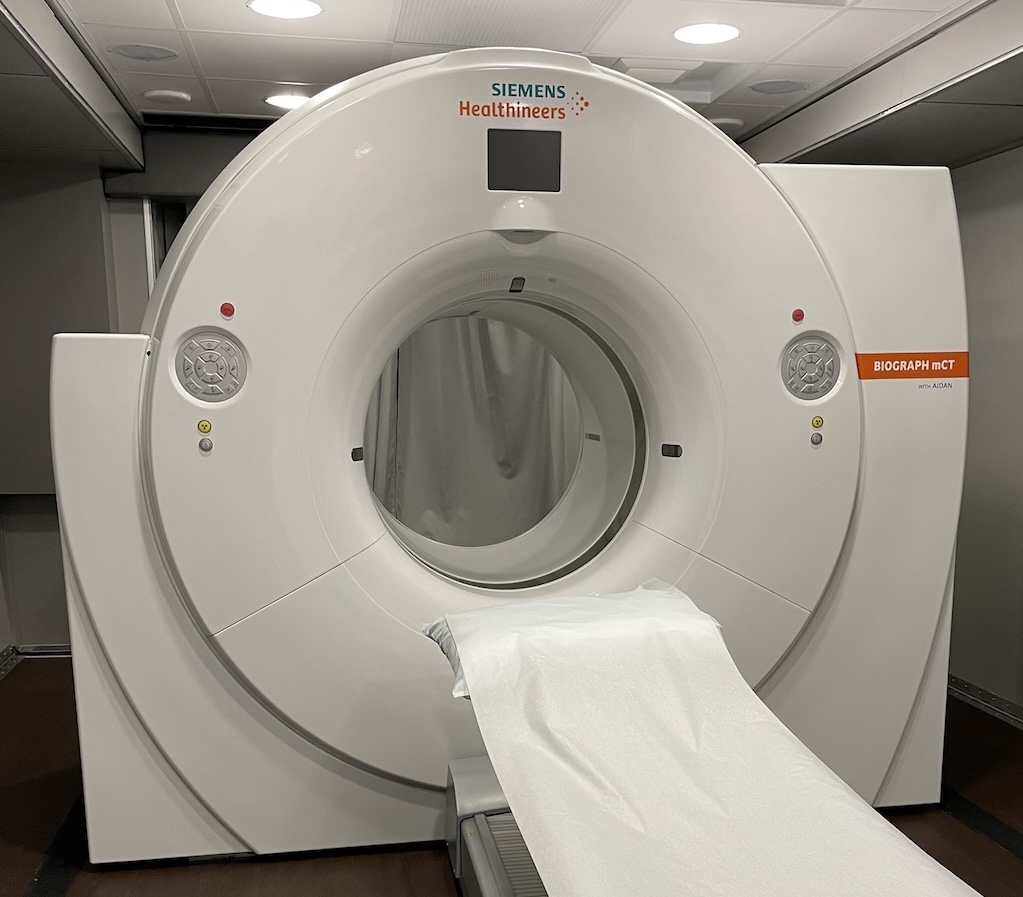
Prostate cancer management has evolved significantly in recent years. Two developments are reshaping clinical pathways: PSMA PET-CT for staging and restaging, and earlier-line access to lutetium-177 PSMA-617 (Pluvicto).
For urology practices, these advances create an opportunity to integrate advanced imaging and targeted radioligand therapy within a coordinated care model.
PSMA PET-CT and the Evolving Standard of Care
Conventional imaging with CT and bone scintigraphy has historically guided staging decisions. However, prospective data have demonstrated superior diagnostic performance with PSMA PET-CT.
Evidence Supporting the Shift
The proPSMA randomized trial demonstrated:
- 92% accuracy for PSMA PET-CT in detecting pelvic nodal and distant metastatic disease, compared to 65% for conventional imaging
- Reduction in equivocal findings from 23% to 7%
- Treatment plan changes in 28% of patients following PSMA PET-CT results
These findings reflect a substantial improvement in staging precision and downstream clinical decision-making.
| Metric | PSMA PET-CT | CT + Bone Scan |
| Accuracy | 92% | 65% |
| Equivocal Findings | 7% | 23% |
| Treatment Plan Change | 28% | Significantly lower |
Current Guideline Positioning
The NCCN Guidelines now support PSMA PET-CT for:
- Initial staging in unfavorable intermediate-, high-, and very high-risk prostate cancer
- Evaluation of biochemical recurrence
- Use as frontline molecular imaging without requiring prior conventional imaging
PSMA PET-CT is now widely incorporated into evidence-based diagnostic algorithms for appropriate patients.
For practices evaluating in-house capability, this shift in guideline positioning warrants consideration.
Linking PSMA Imaging to Radioligand Therapy
PSMA expression confirmed on imaging establishes eligibility for PSMA-targeted radioligand therapy with lutetium-177 PSMA-617 (Pluvicto), directly connecting advanced imaging to therapeutic decision-making.
Evolving FDA Indications for Pluvicto
Pluvicto received FDA approval in March 2022 for patients with PSMA-positive metastatic castration-resistant prostate cancer (mCRPC) previously treated with both:
- An androgen receptor pathway inhibitor (ARPI), and
- Taxane-based chemotherapy
In March 2025, the FDA expanded the indication to include patients with PSMA-positive mCRPC who have progressed on ARPI therapy and are appropriate candidates to delay chemotherapy. This expansion significantly broadened the eligible patient population.
Clinical Evidence
The PSMAfore trial supported this earlier-line use. Compared with switching ARPI therapy, lutetium-177 PSMA-617 demonstrated:
- 59% reduction in the risk of radiographic progression or death
- Improvement in median radiographic progression-free survival from 5.6 months to 9.3 months
- Lower rates of grade 3–5 adverse events compared with the ARPI-switch arm
Earlier access allows appropriate patients to receive targeted therapy prior to chemotherapy, potentially preserving functional status and quality of life.
| 59% reduction in risk of radiographic progression or death. |
Operational Considerations for Implementation
Pluvicto is a high-activity radiopharmaceutical requiring:
- State-specific radioactive materials licensing
- Radiation safety protocols
- Facility preparation and shielding considerations
- Trained technologists and clinical staff
Regulatory requirements vary by state, and implementation involves coordination across radiation safety, pharmacy, and clinical operations.
Clinical Implementation in Practice
In January 2026, Captive Radiology and The Conrad Pearson Clinic in Memphis, Tennessee administered their first Pluvicto treatments, marking a milestone in program deployment.
Technologists Deana McGowen, Kimberly Roberts, and Mishe Simmons completed specialized training to support safe administration. Captive provided equipment, staffing, and regulatory support to enable clinical delivery within the urology practice setting.
Additional partner sites are currently in various stages of implementation.
Strategic Advantages of In-House Integration
Referring patients externally for PSMA PET-CT or radioligand therapy remains common practice. However, internal integration can provide:
- Streamlined coordination between imaging and treatment
- Improved continuity of care
- Consolidated clinical oversight
- Retention of advanced oncologic services within the practice
As PSMA-based imaging and therapy utilization expand, practices with integrated capability may strengthen their prostate cancer care model.
| PSMA PET-CT → Confirm PSMA Positivity → Treatment Stratification → Pluvicto Eligibility |
Expanding Prostate Cancer Care Capabilities
Whether evaluating PSMA PET-CT, implementing a Pluvicto program, or developing both concurrently, successful deployment requires infrastructure, regulatory expertise, and operational coordination.
Captive Radiology provides equipment, staffing, compliance support, and ongoing operational management to support implementation within urology practices.
Interested in evaluating feasibility? Contact Captive Radiology for a structured assessment.